
Types of Residential Property: A Guide to Housing Forms
Explore the main types of residential property, including houses, flats, bungalows, cottages, mansions, manor houses, and prefabricated homes, in this construction guide.
Types of Residential Property: A Guide to Housing Forms
Residential property takes many forms across the world, shaped by climate, culture, land availability, construction methods, and lifestyle. From detached houses and terraced housing to flats, duplexes, cottages, and prefabricated homes, each property type serves different social and functional needs. Understanding these housing forms is useful for students, professionals, and anyone interested in construction, civil engineering, architecture, and the built environment.
Detached houses
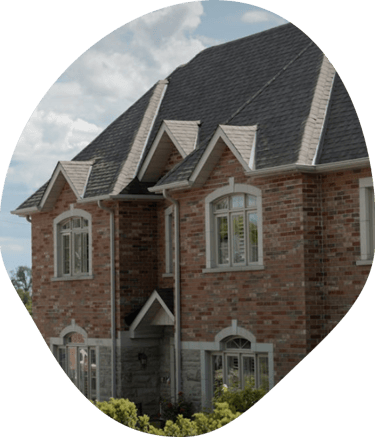
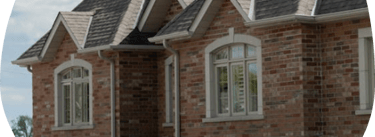
A detached house is a freestanding dwelling that does not share walls with neighbouring properties. This type of home is often associated with privacy, larger plots, and greater independence. Detached houses may offer spacious interiors, larger gardens, and more freedom for extensions or alterations, although they are usually more expensive to buy and maintain.
Because all external walls are exposed, detached houses can also have higher energy demand than homes that share walls. In many countries, they are common in suburban and rural settings where land is more readily available. They remain one of the most desirable residential property types for families seeking space and privacy.
Semi-detached houses
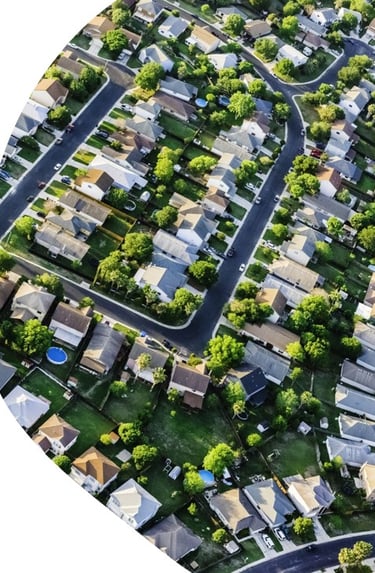
Semi-detached houses are built in pairs and share a single party wall. They are especially common in suburban areas and are often arranged as mirror-image homes. This layout provides a balance between space, affordability, and privacy, which makes semi-detached houses particularly popular with families.
Compared with detached houses, semi-detached homes are usually more affordable and can be slightly more energy-efficient because one wall is shared. They often include front and back gardens, making them attractive to homeowners who want the feel of a house without the cost of a fully detached property.
Terraced houses
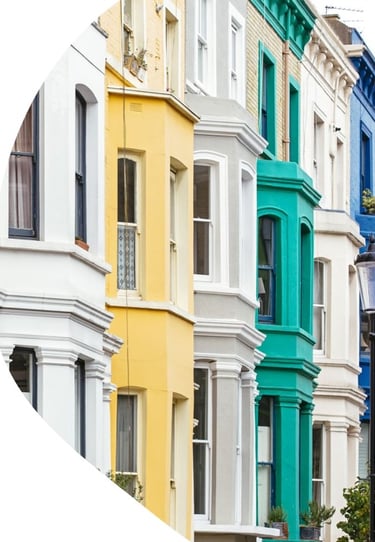
Terraced houses form a row of homes joined by party walls on both sides, except for the end terrace. This housing type is widely found in cities and towns, especially in areas with a strong historical building tradition. In the UK, terraces are often associated with Victorian and Edwardian housing, although similar forms are found in many parts of the world.
Terraced homes are typically narrower than detached or semi-detached properties, but they may extend further back. They often have small front gardens and longer rear gardens, depending on the era and location. Their shared walls help reduce heat loss, making them relatively energy-efficient and more affordable than many other house types.
Bungalows
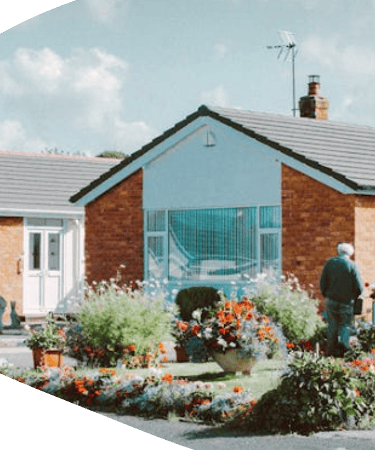
Bungalows are single-storey homes that may be detached or semi-detached. Traditional bungalows keep all rooms on one level, while chalet bungalows include additional space in the roof. Their main appeal lies in accessibility, ease of maintenance, and practical living arrangements.
Bungalows are often favoured by older residents and people with mobility needs, although they are also attractive to small households. In many countries, however, bungalows are becoming less common because land values are high and single-storey homes use plots less efficiently. Even so, they remain an important and flexible residential property type.
Flats
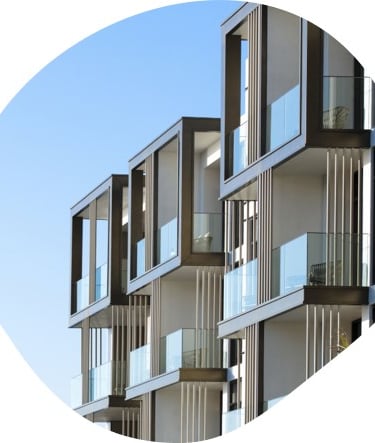
Flats are self-contained residential units within a larger building. They may be purpose-built in apartment blocks or created through the conversion of older houses or commercial buildings. Flats range from compact studio apartments to larger multi-bedroom homes, and many include shared facilities such as gardens, parking, lifts, and communal entrances.
This property type is especially common in urban areas where land is limited and higher-density housing is required. Flats are often popular with first-time buyers, young professionals, students, and renters because they can be more affordable than houses in the same area. They also support efficient land use in dense cities.
Duplexes and Maisonettes
A duplex is a dwelling arranged over two floors, usually connected by an internal staircase. It may share a common entrance or hallway with other homes, particularly in apartment buildings. A maisonette is similar, but it more often has its own external entrance and may occupy part of a larger building or be created through conversion.
These homes combine qualities of both houses and flats. They offer more space than a single-level flat and can provide better separation between living and sleeping areas. Duplexes and maisonettes are common in both older converted properties and newer urban developments.
Cottages
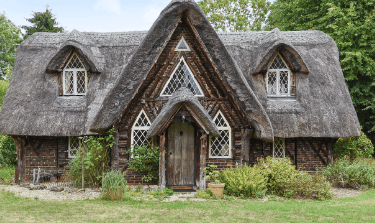
Cottages are usually small, cosy homes, often found in rural or village settings. Many are historically associated with traditional construction and may be over 100 years old, although the term is sometimes used more loosely today. Typical features include thick walls, small windows, low ceilings, and exposed beams.
Cottages are valued for their character and period features, and they often reflect local materials and building traditions. In global terms, similar small traditional homes exist in many regions, though the design and materials vary according to climate and culture. Their charm and historic appeal continue to make them desirable.
Mansions
Mansions are large, impressive houses with multiple bedrooms, substantial floor space, and often several storeys. They are usually associated with high-value property, generous grounds, and luxury amenities such as swimming pools, tennis courts, or home leisure spaces. Modern mansions are often custom-built and located in exclusive residential areas.
Historically, the term also relates to stately homes and country estates, although not every grand house is technically a mansion. Their scale and finish distinguish them from ordinary residential homes, and they often represent wealth, status, and prestige. In some markets, the term is used more broadly for very large luxury houses.
Manor houses
Manor houses are large country houses with substantial grounds and strong historical associations. Traditionally, they were the residences of landowners or local elites and often served as the centre of rural estates and communities. Over time, many have been preserved as important heritage buildings.
Today, manor houses may still be private residences, but some have been converted into hotels, event venues, or multiple dwellings. Many are listed or protected because of their architectural and historical significance. They remain an important part of residential and rural heritage in many countries, especially in the UK and Europe.
Prefabricated houses
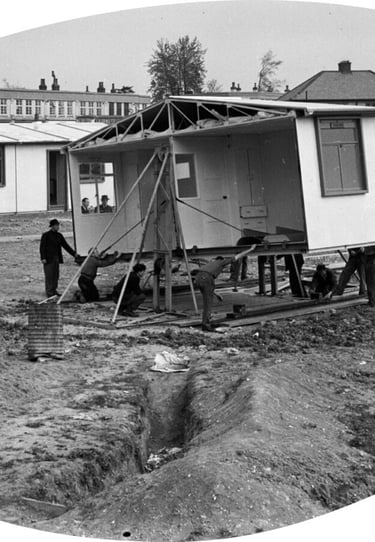
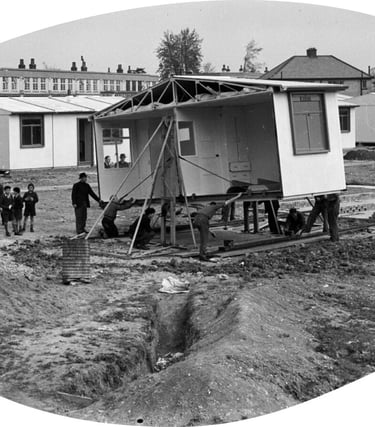
Prefabricated houses, often called prefabs, were widely built after the Second World War to help solve severe housing shortages. They were intended as temporary homes and were assembled from pre-made sections rather than built entirely on site. This made construction faster and more efficient at a time when urgent housing delivery was needed.
Many prefabs were single-storey homes and were designed with a short service life in mind, often around 20 years. However, some still survive today, having been refurbished or maintained over time. While older examples may raise concerns such as asbestos or structural deterioration, they remain historically important as a response to post-war housing need.
Conclusion
The types of residential property found around the world reflect changes in technology, planning, and social expectations. Some homes prioritise privacy and space, while others focus on affordability, density, accessibility, or heritage value. Whether detached, terraced, flat-based, or prefabricated, each property type plays a role in the wider story of housing design and construction.
For anyone studying construction, civil engineering, architecture, or the built environment, understanding residential property types provides a useful foundation for analysing how homes are designed, built, and adapted for different societies.